

Biophilia rTMS: How Transcranial Magnetic Stimulation Treats Depression, Anxiety, and Sleep Disorders
Understanding Transcranial Magnetic Stimulation (rTMS)
In recent years, advances in modern healthcare technology have brought increasing attention to non-invasive neuromodulation approaches. Among these technologies, Repetitive Transcranial Magnetic Stimulation (rTMS) has become an important area of clinical research and neurological treatment.
Transcranial Magnetic Stimulation uses controlled magnetic pulses to stimulate specific areas of the brain. By influencing neuronal activity, this technology provides a non-invasive approach to studying and modulating neural circuits associated with various neurological and psychiatric conditions.
The Biophilia rTMS – Transcranial Magnetic Stimulation Apparatus represents an option within the growing field of magnetic stimulation technology. It is designed for users interested in exploring modern neuromodulation equipment and its potential applications.
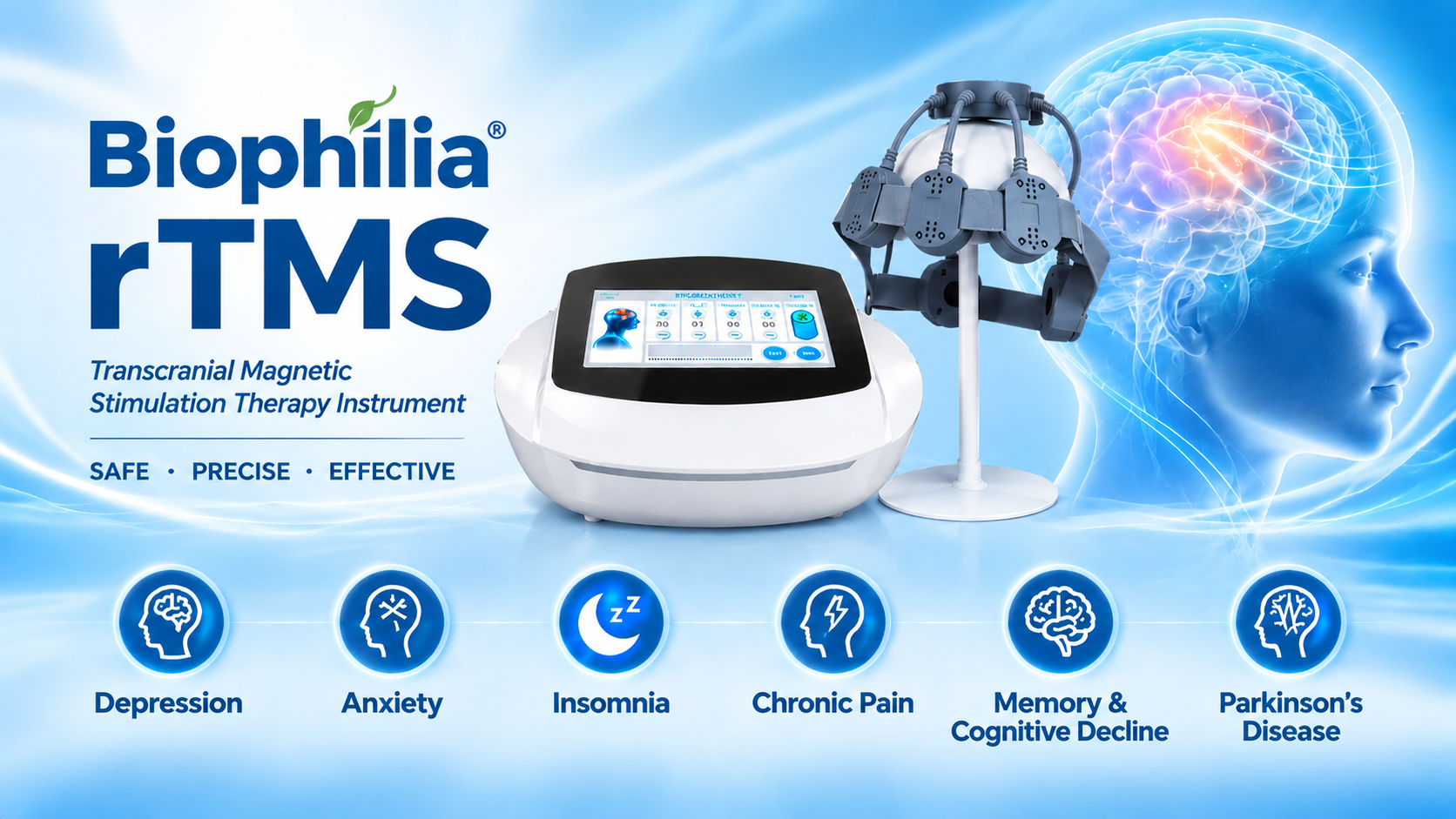
Biophilia rTMS – Transcranial Magnetic Stimulation Apparatus
What Is Repetitive Transcranial Magnetic Stimulation?
Repetitive Transcranial Magnetic Stimulation, commonly known as rTMS, is a non-invasive technique that uses repeated magnetic pulses to influence electrical activity in targeted brain regions.
During stimulation, a magnetic coil positioned near the scalp generates brief magnetic fields. These fields pass through the skull and induce small electrical currents in nearby cortical tissue, influencing the activity of selected neural networks.
Unlike surgical procedures, rTMS does not require an incision or the implantation of electrodes. Different stimulation protocols can be selected according to the treatment objective, stimulation location, frequency and individual clinical requirements.
The effects of magnetic stimulation depend on several factors, including pulse frequency, intensity, treatment duration and the targeted brain region. For this reason, professional assessment and appropriate operating protocols are essential when rTMS is used in a clinical setting.
Common Clinical Applications of rTMS Therapy
Transcranial Magnetic Stimulation has been investigated for a range of neurological and psychiatric conditions. Its clinical applications depend on the specific device, approved indications and treatment protocols.
1. Major Depressive Disorder (MDD)
One of the best-established clinical applications of rTMS is the treatment of certain forms of major depressive disorder, particularly in patients who have not responded adequately to conventional treatments. Specific stimulation protocols commonly target the dorsolateral prefrontal cortex, a brain region involved in mood regulation and cognitive processing.
2. Anxiety and Related Conditions
Researchers continue to investigate the use of repetitive magnetic stimulation for anxiety-related conditions. Certain brain networks associated with emotional regulation, stress responses and fear processing are potential targets for neuromodulation research. Clinical use depends on the specific condition and supporting evidence.
3. Insomnia and Sleep-Related Research
Sleep regulation involves complex interactions between multiple brain regions and neural networks. Transcranial magnetic stimulation is being studied as a potential neuromodulation approach for selected sleep-related conditions. Research outcomes vary depending on stimulation parameters and individual characteristics.
4. Cognitive Function and Neurological Research
Researchers are also exploring how magnetic stimulation may influence cognitive processes such as attention, memory and information processing. These investigations help improve understanding of neuroplasticity and the functional organization of the human brain.
How Does Transcranial Magnetic Stimulation Work?
The fundamental principle of Transcranial Magnetic Stimulation is electromagnetic induction. A stimulation coil produces a rapidly changing magnetic field, which induces an electrical current in the targeted cortical region.
Repeated magnetic pulses can influence neuronal excitability and the communication patterns of specific neural networks. Depending on the stimulation frequency and protocol, different effects on cortical activity may be observed.
Magnetic Field Generation
The stimulation coil generates controlled magnetic pulses.
Electromagnetic Induction
The changing magnetic field induces electrical currents in targeted cortical tissue.
Neural Modulation
Repeated stimulation influences the activity of selected neural circuits.
The selection of stimulation parameters is an important part of the process. Frequency, intensity, pulse duration, coil positioning and session schedules all contribute to the overall stimulation protocol.
Discover the Biophilia Magnetic Stimulation Device
Explore the following product video to learn more about the design and operation of Biophilia's magnetic stimulation technology.
Biophilia sTMS – Targeted Magnetic Stimulation. Non-Invasive. Easy to Use.
What to Expect During an rTMS Session
A typical clinical rTMS session follows a structured procedure. The exact process varies according to the equipment, treatment protocol and individual assessment.
Initial Assessment
A qualified healthcare professional evaluates the individual's medical history, treatment objectives and suitability for magnetic stimulation. The appropriate stimulation area and protocol are then determined.
Device Positioning and Stimulation
The stimulation coil is positioned according to the selected protocol. Magnetic pulses are delivered in a controlled manner while the individual remains awake and seated.
Monitoring and Follow-Up
The operator monitors the session and evaluates the individual's response. Treatment frequency and duration depend on clinical recommendations and the specific application.
Although rTMS is non-invasive, it may cause temporary scalp discomfort or headaches. Seizures are a rare but important potential risk. Appropriate screening and professional supervision are therefore necessary.
Choosing a Transcranial Magnetic Stimulation Device
Selecting an appropriate Transcranial Magnetic Stimulation device requires consideration of its technical specifications, intended application and operating environment.
- Stimulation Parameters: Review available frequency settings, pulse intensity and stimulation protocols.
- Device Configuration: Consider the coil design, positioning system and overall equipment configuration.
- Operation and Safety: Check the operating procedures, safety features and applicable regulatory documentation.
- Technical Support: Evaluate product documentation, training resources and after-sales service.
- Intended Use: Confirm that the device is appropriate for the intended application and complies with relevant local regulations.
Understanding these factors can help professional users and equipment buyers make more informed decisions when comparing magnetic stimulation systems.
Explore Biophilia rTMS Technology
Discover the Biophilia Transcranial Magnetic Stimulation Apparatus and explore its product information, technical configuration and available equipment details.
Explore the ProductVisit www.nls-biophilia.com for more information about Biophilia wellness technology.
Conclusion
Repetitive Transcranial Magnetic Stimulation represents an important development in non-invasive neuromodulation technology. Through controlled electromagnetic stimulation, rTMS provides a way to influence targeted neural circuits and has established clinical applications as well as continuing research potential.
As interest in neurological technology continues to expand, understanding the working principles, clinical applications and technical characteristics of magnetic stimulation equipment becomes increasingly important.
The Biophilia rTMS – Transcranial Magnetic Stimulation Apparatus offers an opportunity to explore this developing field of magnetic stimulation technology.